Residential and commercial glass
This is the service for a cracked railing panel
Roxy Glass supplies and installs glass railings for decks, balconies and stairs, and glass pool fencing. Railing glass is a guard, so it is made from tempered or laminated safety glass and set in posts, standoffs or a base shoe that is engineered to carry the load required by code.
Free estimates, no obligation. Request a free glass railings and pool fences estimate.
If any of the following describes what you are looking at, this is the service that handles it.
How it is built
The system decides how the railing looks, what it fixes into and how much preparation the structure needs. This is the choice that shapes the estimate.
| System | How it works | Suits | What it needs from the structure |
|---|---|---|---|
| Base shoe | A continuous channel along the floor or deck edge grips the bottom of the glass, with no posts at all. | The cleanest, most uninterrupted view. Long straight runs. | The most from the structure, because all the load goes into that continuous channel. |
| Standoffs | Round fittings pass through or clamp the glass and fix back to the face of the deck or slab edge. | A light look that keeps the glass clear of the floor. Balconies and terraces. | A solid vertical face to fix into, and accurate positioning of every fitting. |
| Posts and clamps | Vertical posts at intervals carry clamps that hold the glass panels between them. | The most forgiving option, and usually the most economical. | The least, because the load goes into individual posts rather than a continuous fixing. |
A glass guard is only as good as what it is bolted to. Soft or rotted deck framing, spalling concrete or an edge detail that cannot take the fixing all have to be put right first. We will tell you honestly if we think the structure needs attention before glass, because a railing that fails is a serious matter and not one worth cutting corners on.
Pool fencing
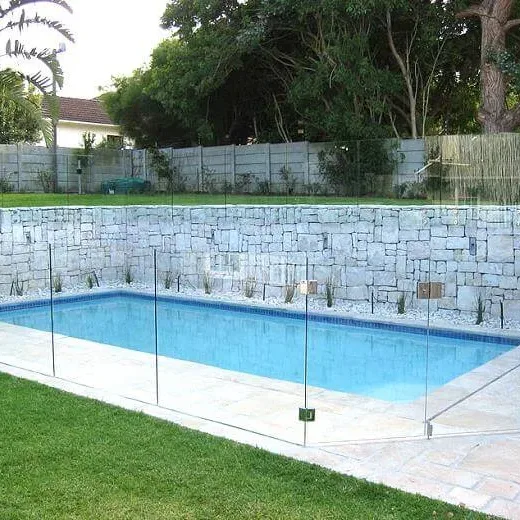
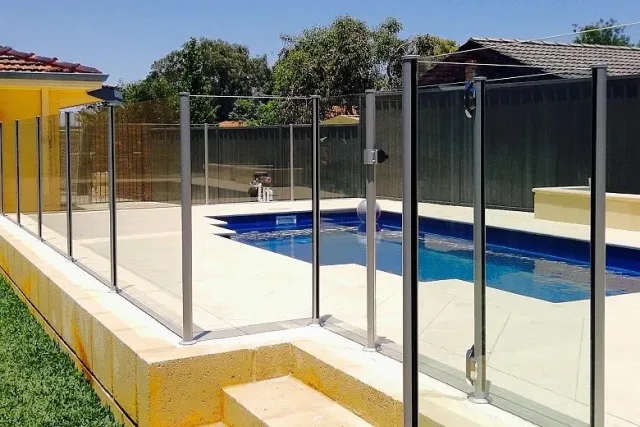
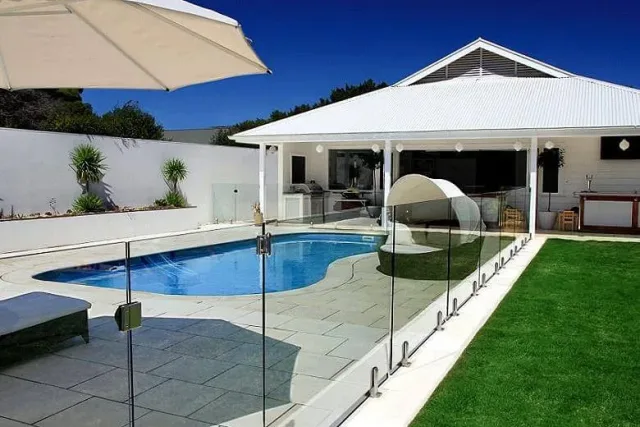
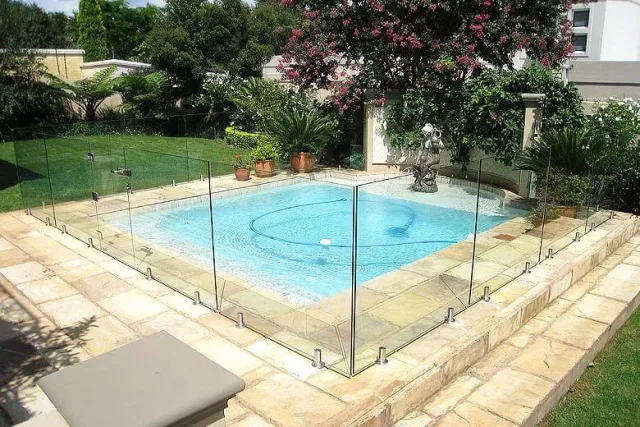
A glass pool fence does the job a solid fence does without taking away the view of the pool, which is the reason most people want one. It also means an adult in the house can see the water, which is not a small point.
Pool barrier requirements in California are set in state law and enforced by your local building department, and they cover the height of the barrier, gaps beneath and between panels, and how gates latch and self close. Those requirements are not ours to interpret for your property. What we do is build to what your building department requires and tell you plainly when a design you have in mind will not meet it.
If you are enclosing a pool, tell us at the estimate stage and confirm the current requirements with your city or county building department before the glass is ordered.
The work itself
These are the stages the job actually runs through, from the first look at the opening to the finished glass.
What happens next
Call the line for your area or send the estimate form. A photo of the damage and a rough measurement lets us tell you straight away whether it is a glass only repair or a full replacement.
Glass is cut to the opening, not to a catalog size, so the measurement has to be exact. For most jobs we measure on site. For a simple pane you can measure it yourself and we will tell you how.
The estimate is free and it sets out the glass type, the thickness, whether safety glazing is required and what the work involves. Nothing is ordered until you approve it.
Standard glass is usually cut at our Newark shop. Sealed double pane units, tempered glass and made to order shapes are fabricated to your measurements, which is what sets the lead time.
We fit the glass, check that it seals and operates properly, and take the old glass and packaging away with us.
Cost
Roxy Glass does not publish a fixed price for this work, because the price depends on the opening in front of us. Estimates are free, so the fastest way to get a real number is to send the measurements and a photo, or to have us come and measure.
Where we do this work
This work is carried out from our Newark shop across Santa Clara County, San Mateo County, Alameda County, Contra Costa County, San Francisco and southern Marin County.
Santa Clara County from San Jose out to Los Gatos and Cupertino.
San Jose, Sunnyvale, Santa Clara, Cupertino, Campbell, Los Gatos, Saratoga, Milpitas.
San Mateo County and the northern Santa Clara Valley.
Palo Alto, Mountain View, San Mateo, Los Altos, Los Altos Hills, Menlo Park, Atherton, Redwood City, San Carlos, Belmont, Foster City, Burlingame, Millbrae, San Bruno.
The Tri City area, the Hayward and Oakland corridor and the shoreline cities.
Fremont, Newark, Union City, Hayward, San Leandro, San Lorenzo, Castro Valley, Alameda, Richmond.
Inland Alameda County and central Contra Costa County.
Walnut Creek, Pleasanton, Dublin, Livermore, Sunol, San Ramon, Danville, Alamo, Lafayette, Moraga, Orinda, Pleasant Hill, Concord, Martinez.
San Francisco, northern San Mateo County and southern Marin County.
San Francisco, South San Francisco, Daly City, San Rafael, Mill Valley, Larkspur, Corte Madera, San Anselmo, Tiburon.
Send your details on the free estimate form and the team that covers your address will answer. You can also call the Newark shop on (510) 400-7788, which is where every Bay Area job is dispatched from.
Questions
Yes, when it is the right glass in the right system. Railing glass is a guard, so it is tempered or laminated safety glass, usually much thicker than window glass, and it is set into a base shoe, standoffs or posts that are engineered to carry the loads that building code requires for a guard. It is the system as a whole that carries the load, not the glass on its own.
Tempered glass is heat treated so that it is strong and breaks into small blunt pieces. Laminated glass bonds two sheets to a plastic interlayer, so that if it breaks the interlayer holds the pieces in place and the panel stays standing. Many guard applications, particularly where there is no top cap rail, call for laminated glass for exactly that reason. We specify based on the location and what code requires there.
Not always, and a frameless look without one is popular. Whether a top cap rail is required depends on the glass specification, the system and what your local building department requires for that guard. A cap rail also protects the top edge of the glass from impact. We will tell you which options are available for your situation before you choose on appearance alone.
Cleaning, mostly. Glass on an exposed deck or a pool surround shows water spots and salt or mineral deposits, and it will need washing more often than a solid railing needs painting. Hardware should be checked periodically for corrosion and tightness, particularly near a pool or close to the bay where the air carries more salt.
Usually yes, provided the system and the glass specification can be matched. We measure the opening, confirm the thickness and the glass type, and order a matching panel. Where the system has been discontinued, matching is harder and we will tell you at the estimate stage what the realistic options are.
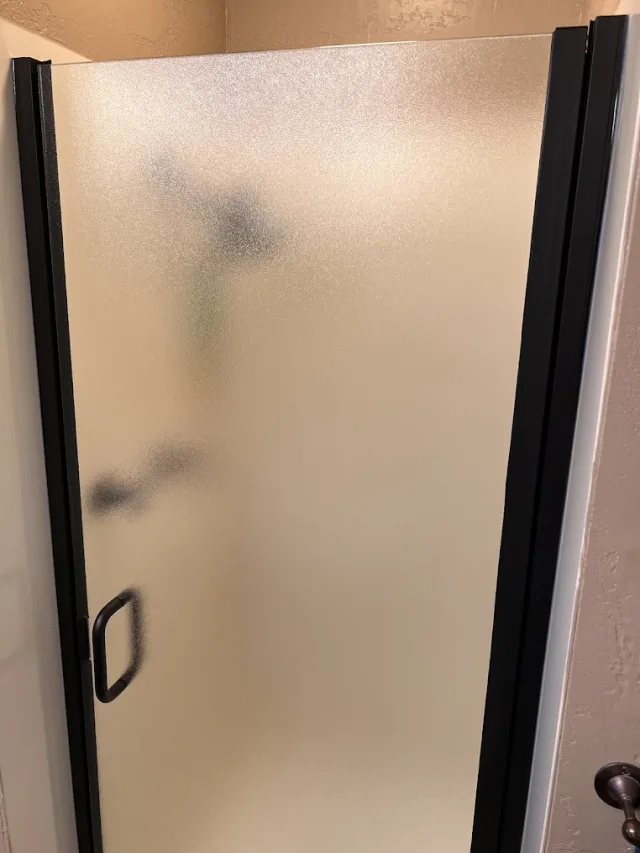
Frameless, semi frameless and framed shower glass, measured and fitted to the opening you actually have.
Read about shower doors and enclosures
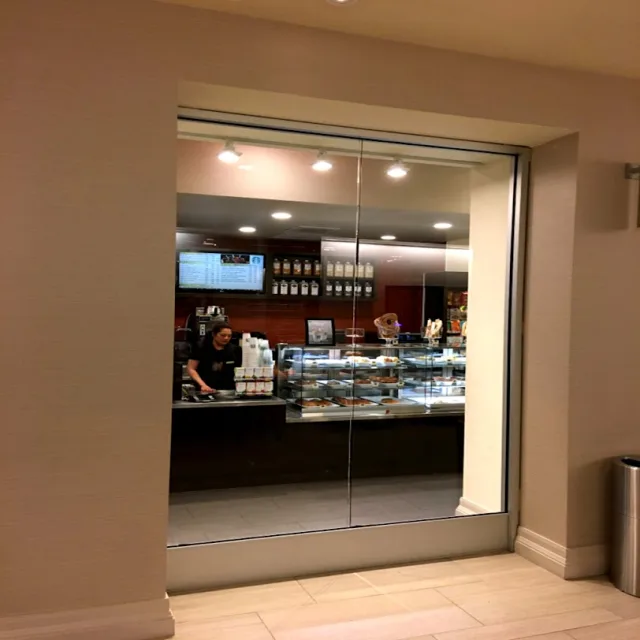
Interior glass walls, offices and meeting rooms that keep the light and the sightlines while dividing the space.
Read about glass partition walls
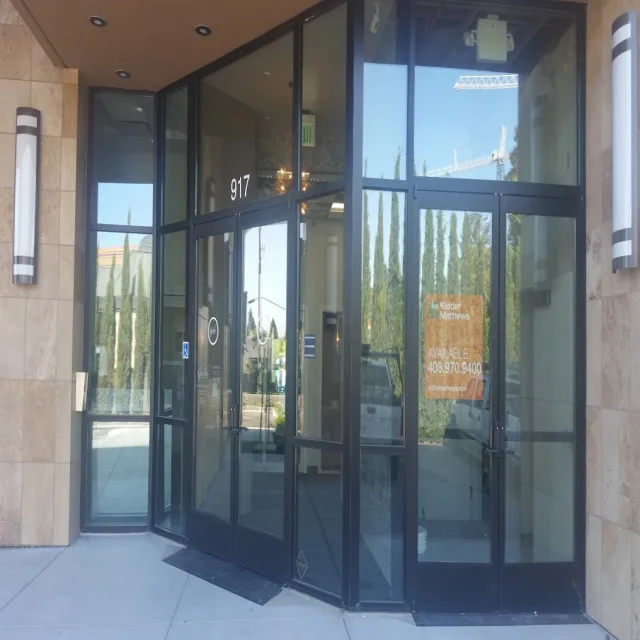
Storefront windows, entry doors and aluminum framing repaired or replaced so the business can reopen.
Read about storefront glass
Next step
Tell us the length of the run, whether it is a deck, balcony, stair or pool surround, and what the railing will fix into. We will tell you which system suits it.
Estimates are free. Tell us what broke, send a photo if you have one, and we will tell you whether it is a glass only repair or a full replacement before any work is booked.
Leave a message or use the estimate form and we will reply when we open.